According to the American College of Prosthodontists, approximately 178 million Americans are missing at least one tooth, and more than 40 million have lost all of their natural teeth. For residents of Bowling Green and Warren County seeking a permanent solution to tooth loss, dental implants represent the gold standard in modern restorative dentistry. Unlike dentures or bridges that sit on the gum surface, dental implants replace the entire tooth structure from root to crown, providing stability, function, and aesthetics that closely mirror natural teeth.
Whether a patient needs to replace a single missing tooth, restore several teeth with an implant-supported bridge, or undergo full-mouth rehabilitation, dental implant technology offers solutions tailored to virtually every situation. This guide examines the types of dental implants available, what patients in the Bowling Green area can expect to pay, candidacy requirements, the step-by-step procedure, and how implants compare to alternative tooth replacement options.
Table of Contents
Key Takeaways (TL;DR)
- Success rates exceed 95%: Modern dental implants demonstrate documented success rates between 95% and 98% at five years post-placement, according to research published by the National Institutes of Health.
- Three main implant categories: Single-tooth implants replace individual missing teeth, implant-supported bridges restore multiple adjacent teeth, and full-mouth implants (such as All-on-4) can replace an entire arch.
- Cost varies by complexity: Single dental implants typically range from $3,000 to $6,000, while full-mouth restorations can range from $25,000 to $90,000 depending on the technique and number of implants required.
- Bone grafting may be necessary: Research indicates that approximately 50% of dental implant procedures require some form of bone grafting to ensure adequate jawbone support for long-term implant stability.
- A lifetime investment: With proper care and maintenance, dental implants can last 20 years or longer. A 2024 meta-analysis found that 4 out of 5 implants remain successful after two decades, making them more cost-effective over time than alternatives requiring frequent replacement.
What Are Dental Implants and How Do They Work?
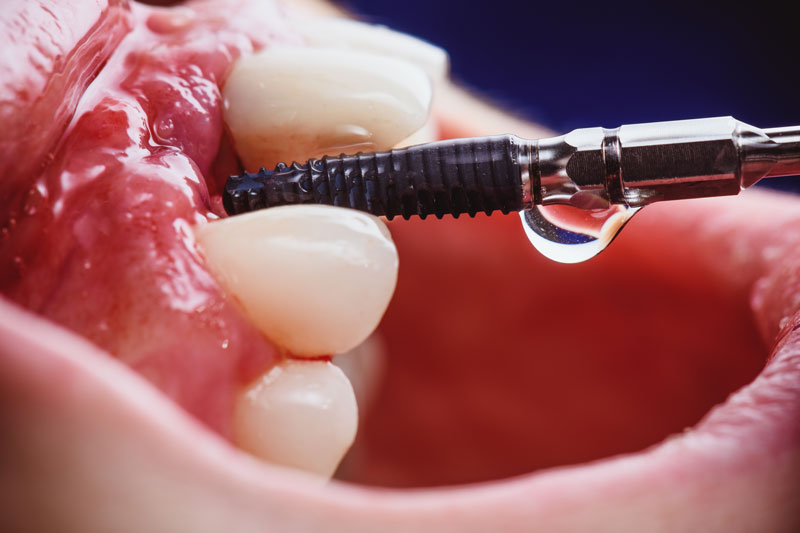
A dental implant is a titanium post surgically placed into the jawbone to serve as an artificial tooth root. Once the implant integrates with the bone through a process called osseointegration, it provides a permanent foundation for a custom-made crown, bridge, or denture. Unlike traditional tooth replacement options that rest on the gum surface, implants anchor directly into the jaw, mimicking the structure and function of natural teeth.
The biocompatibility of titanium allows the jawbone to fuse directly with the implant surface over a period of three to six months. This integration creates a stable, load-bearing structure capable of withstanding normal chewing forces for decades. According to the American Academy of Implant Dentistry, titanium implants account for more than 90% of all dental implants placed worldwide due to their proven track record and durability.
Beyond restoring chewing function, dental implants offer a significant health advantage: they help preserve jawbone density. When a tooth is lost, the surrounding bone begins to deteriorate because it no longer receives stimulation from the tooth root. Research published by the National Institutes of Health indicates that patients can lose up to 25% of bone volume in the first year after tooth loss. Implants halt this process by providing the mechanical stimulation the jawbone needs to maintain its structure. For patients exploring comprehensive dental care in Bowling Green, implants represent one of the most advanced restorative options available.
Anatomy of a Dental Implant
- Implant Post: A titanium screw (typically 8-16mm in length) surgically placed into the jawbone to replace the natural tooth root
- Abutment: A connector piece that attaches to the top of the implant post and supports the final restoration
- Crown: A custom-fabricated ceramic or porcelain tooth designed to match the color, shape, and size of surrounding natural teeth
What Types of Dental Implants Are Available?
Dental implant solutions range from single-tooth replacements to full-mouth restorations, allowing treatment plans to be customized based on the number of missing teeth, jawbone condition, and patient preferences. The three primary categories of dental implants address different levels of tooth loss, each with distinct advantages.
Single-Tooth Implants
When only one tooth is missing, a single-tooth implant provides the most conservative and effective solution. One titanium post supports one custom crown, leaving adjacent healthy teeth completely untouched. This approach contrasts with traditional bridges, which require grinding down neighboring teeth to serve as anchors. Single implants also prevent the bone loss and tooth shifting that commonly occur when gaps are left untreated.
Multiple-Tooth Implants and Implant-Supported Bridges
For patients missing two to four adjacent teeth, an implant-supported bridge offers an efficient solution. Rather than placing one implant per missing tooth, two or three strategically positioned implants can support a multi-unit bridge. This approach reduces surgical complexity, lowers overall cost, and still provides the stability and bone-preserving benefits of implant technology.
Full-Mouth Implants and Full-Arch Restorations
Patients who have lost most or all of their teeth can benefit from full-arch implant systems. The All-on-4 technique, for example, uses four strategically angled implants to support an entire arch of fixed replacement teeth. All-on-6 and All-on-8 variations provide additional support for patients with greater bone density or higher functional demands. These systems eliminate the inconvenience and discomfort of traditional removable dentures while restoring near-normal chewing ability.
Implant-Supported Dentures
For those who prefer a removable option with enhanced stability, implant-supported dentures (sometimes called snap-on dentures) attach to two to four implants using special connectors. These dentures can be removed for cleaning but remain securely in place during eating and speaking, eliminating the slipping and discomfort associated with conventional dentures.
How Much Do Dental Implants Cost in Bowling Green, KY?
The cost of dental implants varies based on the complexity of the case, the number of implants required, and whether additional procedures such as bone grafting or tooth extractions are needed. For Warren County residents considering implant treatment, understanding the components that contribute to total cost helps set realistic expectations and allows for better financial planning.
According to data compiled by Forbes Health and CareCredit, the national average cost for a single dental implant ranges from $3,000 to $6,000 as of 2024. This figure typically includes the implant post, abutment, and crown, along with necessary consultations and imaging. However, patients requiring preparatory procedures will see higher total costs.
Full-mouth restorations represent a significantly larger investment. All-on-4 procedures typically range from $15,000 to $30,000 per arch, while more extensive All-on-6 or All-on-8 systems can cost $20,000 to $50,000 per arch. Patients requiring both upper and lower arch restoration should expect costs between $30,000 and $90,000 for complete treatment.
Cost Comparison by Implant Type
Insurance Coverage and Financing Options
Dental insurance coverage for implants varies considerably by plan. Some policies cover a portion of the implant procedure (often 50% of certain components), while others exclude implants entirely or classify them as elective. Patients should verify their specific benefits before beginning treatment. In some cases, medical insurance may provide coverage if tooth loss resulted from an accident, injury, or medical condition rather than decay or periodontal disease.
Many dental practices in the Bowling Green area offer financing options to help patients manage implant costs. Third-party healthcare credit programs, in-house payment plans, and dental savings plans can make treatment more accessible. When evaluating cost, patients should also consider the long-term value: while implants have higher upfront costs than dentures or bridges, their 20+ year lifespan often makes them more economical over time. Practices like Chandler Park Dental Care can provide detailed cost estimates and discuss available payment options during a consultation.
Cost Perspective: According to Forbes Health, while dental implants require a higher initial investment than alternatives, their durability often results in lower lifetime costs. Traditional dentures and bridges typically require replacement every 5 to 10 years, while properly maintained implants can last 20 years or longer.
Who Is a Good Candidate for Dental Implants?
Most adults with missing teeth are potential candidates for dental implants, though certain factors influence treatment success. A thorough evaluation by a qualified dental provider determines whether implants are appropriate or if preparatory procedures are needed first. The ideal candidate has adequate jawbone density, healthy gum tissue, and good overall health.
Age alone does not disqualify someone from implant treatment. According to industry data, approximately 12.9% of dental implants are placed in patients aged 65 to 74, and many successful implant procedures are performed on patients in their 80s. The determining factors are bone quality, medical status, and commitment to proper oral care rather than chronological age.
Certain health conditions may affect implant candidacy or require additional precautions. Uncontrolled diabetes can impair healing and increase infection risk. Autoimmune disorders, bleeding disorders, and conditions requiring immunosuppressive medications may complicate treatment. Heavy smoking significantly increases implant failure rates, as tobacco use restricts blood flow to the gums and interferes with osseointegration. Patients with these conditions are not automatically excluded but should discuss their medical history thoroughly with their dental provider.
Dental Implant Candidacy Checklist
Patients who do not initially meet candidacy requirements may still become eligible after preparatory treatment. Bone grafting can restore adequate jawbone volume. Periodontal therapy can address gum disease. Smoking cessation programs can reduce surgical risks. A comprehensive evaluation identifies any barriers and outlines the steps needed to achieve successful implant placement.
What Is the Dental Implant Procedure?
The dental implant process unfolds over several months and involves multiple phases, each essential to achieving a stable, long-lasting result. While the timeline varies based on individual healing rates and whether preparatory procedures are required, most patients can expect the complete process to take four to nine months from initial consultation to final restoration.
Modern implant dentistry utilizes advanced imaging technology, including cone-beam computed tomography (CBCT), to create detailed 3D maps of the jawbone, nerves, and sinuses. This precision planning allows dentists to determine optimal implant positioning before surgery begins, reducing complications and improving outcomes. For patients with dental anxiety, sedation options ranging from nitrous oxide to IV sedation can make the experience more comfortable.
What to Expect During Implant Surgery
On the day of implant placement, the dentist administers local anesthesia to numb the treatment area. For patients who opt for sedation, additional medications ensure relaxation throughout the procedure. A small incision is made in the gum tissue to expose the jawbone, and a precision drill creates a channel for the implant post. The titanium implant is then inserted and the gum tissue is sutured closed.
Most patients report that the procedure is less uncomfortable than expected. Post-operative symptoms typically include mild swelling, bruising, and discomfort that can be managed with over-the-counter pain relievers and cold compresses. Prescription pain medication is available for patients who need it. Most individuals return to normal activities within one to two days, though strenuous exercise should be avoided for about a week.
Same-Day Teeth Option: Some patients qualify for immediate-load implants, also known as “teeth in a day.” In this approach, a temporary crown or bridge is attached to the implant immediately after placement, providing aesthetics and function while osseointegration occurs. Not all cases are suitable for this technique; adequate bone density and implant stability are required.
Do Dental Implants Require Bone Grafting?
Bone grafting is not always necessary, but it plays a critical role for patients who lack sufficient jawbone volume to support dental implants. According to research published in the Journal of Pharmacy and BioAllied Sciences, approximately 50% of dental implant procedures require some form of bone augmentation. The need for grafting depends on how long teeth have been missing, the cause of tooth loss, and individual anatomy.
Did You Know?
When a tooth is lost, the jawbone in that area can lose up to 25% of its volume within the first year due to lack of stimulation. This bone resorption continues over time, which is why patients who have been missing teeth for years often require bone grafting before implant placement.
Bone grafting involves placing bone material at the deficient site to encourage new bone growth. The graft acts as a scaffold, stimulating the body’s natural regenerative processes. Over a period of three to six months, the grafted material integrates with the existing jawbone, creating a foundation sturdy enough to support implants.
Types of Bone Grafts Used in Implant Dentistry
Socket Preservation Graft
Performed immediately after tooth extraction to maintain bone volume. Graft material fills the empty socket, preventing the collapse that typically occurs during healing. This proactive approach often eliminates the need for more extensive grafting later.
Block Bone Graft
Used when significant bone loss has occurred. A small block of bone is harvested from another area of the mouth (commonly the back of the jaw or chin) and secured to the deficient site with tiny screws. Healing typically requires four to six months.
Sinus Lift (Sinus Augmentation)
Required when implants are planned for the upper back jaw and the sinus floor is too close to the jawbone. The sinus membrane is gently lifted, and bone graft material is placed beneath it to increase bone height. This procedure is common for upper molar replacements.
Ridge Expansion
Addresses a jawbone that is too narrow to accommodate an implant. The ridge is carefully divided, and bone graft material is inserted to widen it. This technique is particularly useful for the upper jaw.
Bone Graft Materials
Several types of bone graft materials are used in implant dentistry, each with specific advantages:
Recovery from bone grafting is generally straightforward. Patients may experience swelling and mild discomfort for several days, manageable with prescribed or over-the-counter medications. The grafted area requires three to six months to fully integrate before implant placement can proceed. During follow-up appointments, the dentist monitors healing progress and determines when the bone is ready to support an implant.
How Long Do Dental Implants Last?
Dental implants are designed to be a permanent tooth replacement solution, and research consistently demonstrates their exceptional longevity. According to studies published in the National Library of Medicine, dental implants have an overall success rate of 98.6% at five years post-placement. The 10-year survival rate ranges from 90% to 95%, and a 2024 meta-analysis published in Clinical Oral Investigations found that 4 out of 5 implants remain successful after 20 years.
Dental Implant Success Rates Over Time
95-98%
5-Year Success Rate
90-95%
10-Year Success Rate
80-88%
20-Year Success Rate
Source: Clinical Oral Investigations, 2024 meta-analysis; National Library of Medicine
The titanium implant post itself can last a lifetime when properly placed and maintained. However, the crown attached to the implant may require replacement after 10 to 15 years due to normal wear. This is comparable to the lifespan of crowns placed on natural teeth and represents a minor maintenance cost relative to the overall investment.
Factors That Affect Implant Longevity
Several factors influence how long dental implants last:
- Oral hygiene: Regular brushing, flossing, and professional cleanings prevent peri-implantitis (infection around the implant)
- Smoking: Tobacco use significantly increases the risk of implant failure by restricting blood flow and impairing healing
- Medical conditions: Uncontrolled diabetes and autoimmune disorders can compromise implant success
- Teeth grinding (bruxism): Excessive force from clenching or grinding can damage the crown or stress the implant; a night guard may be recommended
- Regular dental visits: Ongoing monitoring allows early detection of any issues before they become serious
Long-Term Value: While dental implants have higher upfront costs than dentures or bridges, their longevity often makes them more economical over a lifetime. Traditional dentures typically require replacement every 5 to 7 years, and bridges last 5 to 15 years. An implant that lasts 20+ years eliminates multiple replacement cycles and their associated costs.
How Do Dental Implants Compare to Other Tooth Replacement Options?
Patients considering tooth replacement have three primary options: dental implants, fixed bridges, and removable dentures. Each solution has distinct advantages and limitations, and the best choice depends on individual circumstances including the number of missing teeth, jawbone condition, budget, and personal preferences.
Understanding the key differences helps patients make informed decisions about their oral health. The following comparison examines how these options perform across the factors that matter most to patients.
When Each Option May Be Most Appropriate
Dental Implants Are Ideal When:
Patients want a permanent, low-maintenance solution that preserves bone health; patients are missing one tooth, several teeth, or need full-arch restoration; long-term value is prioritized over upfront cost; patients have adequate bone density or are willing to undergo grafting.
Fixed Bridges May Be Preferred When:
Adjacent teeth already have crowns or large fillings and would benefit from coverage; patients want a fixed solution but cannot undergo implant surgery; treatment time is a priority (bridges can be completed in 2-3 weeks versus months for implants).
Removable Dentures May Be Appropriate When:
Budget constraints make implants or bridges unfeasible; significant bone loss makes implant placement challenging without extensive grafting; patients prefer a non-surgical option; a temporary solution is needed while planning for future implants.
Community Overview: Dental Implant Care in Warren County
Bowling Green serves as the regional healthcare hub for Warren County and surrounding communities in south-central Kentucky. Residents from throughout the area have access to dental practices offering implant services, from single-tooth replacements to comprehensive full-mouth restorations. The presence of Western Kentucky University contributes to a community that values education and evidence-based healthcare.
When selecting a provider for dental implant treatment, patients should consider the dentist’s training and experience with implant procedures, the technology available (such as 3D imaging for treatment planning), and the range of services offered. Practices that provide comprehensive dental care under one roof can streamline the treatment process, handling everything from initial consultation through final restoration without referrals to multiple specialists.
Communities Served in the Bowling Green Area
Patients traveling from neighboring communities such as Alvaton, Scottsville, or Smiths Grove will find that most implant appointments are scheduled with adequate time between visits, allowing the healing process to progress naturally. The initial consultation, implant placement surgery, and final restoration each represent distinct appointments, typically spread over several months. This timeline accommodates patients who may need to coordinate travel or work schedules.
For those exploring implant options in the Bowling Green area, scheduling a consultation is the first step toward understanding what treatment involves. During this appointment, the dentist evaluates oral health, discusses goals and concerns, and outlines a personalized treatment plan including realistic timelines and costs.
Frequently Asked Questions About Dental Implants
The following questions address common concerns patients have when considering dental implant treatment.
Sources
- American Dental Association (ADA) – Clinical guidelines and patient education resources
- National Institutes of Health (NIH) – Dental implant research and clinical studies
- Centers for Disease Control and Prevention (CDC) – Oral health statistics and data
- American Academy of Implant Dentistry (AAID) – Implant dentistry standards and research
- American College of Prosthodontists – Tooth loss statistics and treatment guidelines
- Clinical Oral Investigations (2024) – 20-year meta-analysis of dental implant survival rates
- Journal of Pharmacy and BioAllied Sciences – Bone grafting research in implant dentistry
Last reviewed: December 2024
About the Author
This article was reviewed by dental professionals with expertise in implant dentistry and restorative care. Chandler Park Dental Care in Bowling Green, Kentucky, provides comprehensive dental implant services including single-tooth implants, implant-supported bridges, full-mouth restorations, and bone grafting procedures.
Dr. Eli Jackson, DMD, leads the practice with a commitment to patient-centered care and advanced treatment options. For more information about the dental team and services offered, visit the Meet the Dentists page.