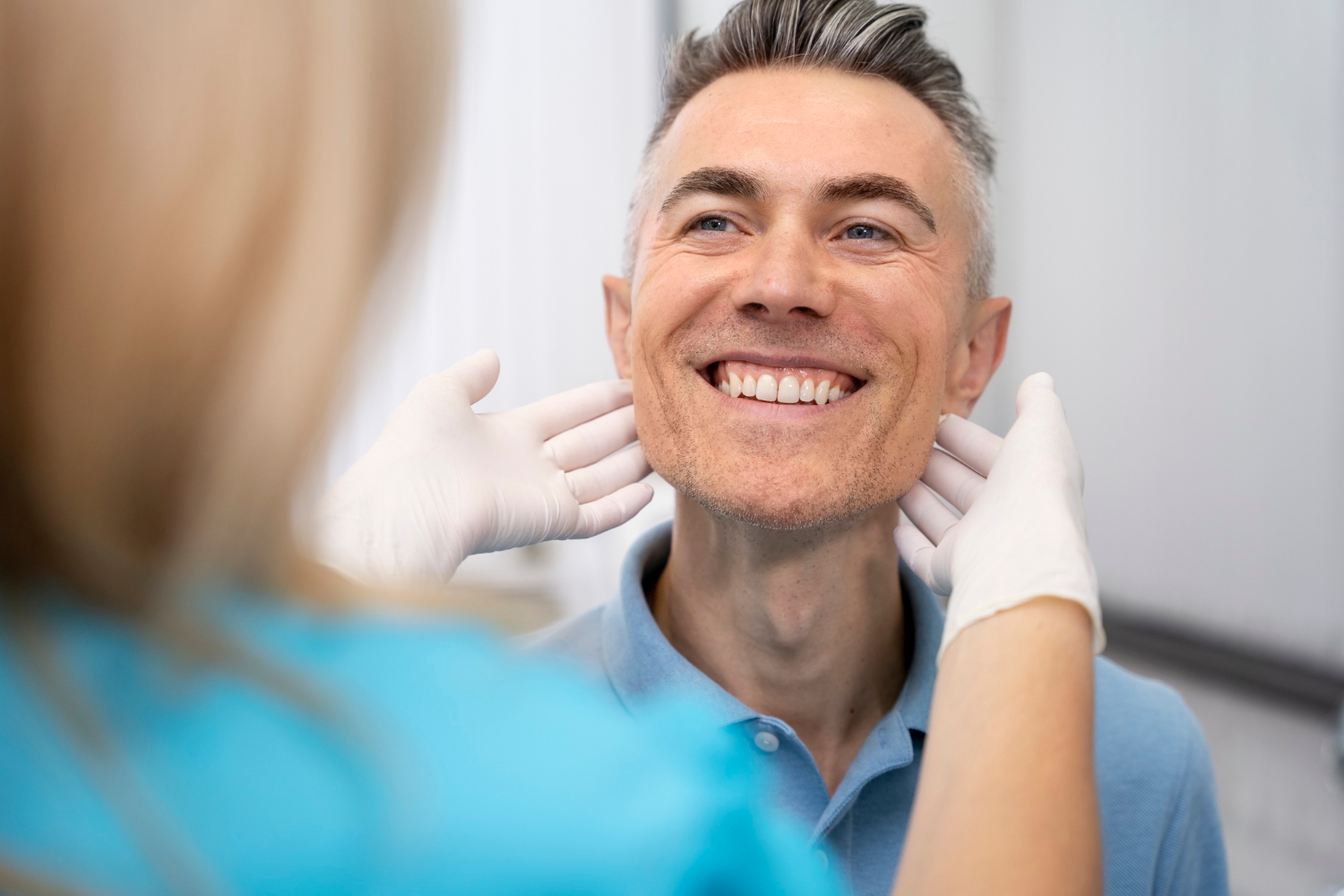
The day a patient receives new dentures marks a significant change. The mouth must adapt to an entirely new appliance. Speech sounds different. Eating requires new techniques. Some discomfort is normal. Many patients wonder if they will ever feel normal again. The answer is yes. With time and practice, most patients adjust successfully to their new dentures.
This guide explains what patients experience when living with dentures. It covers the adaptation period, eating techniques, speech changes, managing sore spots, and building confidence. For a complete overview of denture options, review The Complete Guide to Dentures. For broader context on comprehensive care, see the Complete Guide to Comprehensive Dental Care.
Table of Contents
Key Takeaways (TL;DR)
- Adaptation takes time. Most patients adjust within two to four weeks. The mouth learns to accept the denture gradually.
- Eating requires new techniques. Start with soft foods. Cut food into small pieces. Chew on both sides simultaneously.
- Speech improves with practice. Reading aloud accelerates adaptation. Most patients regain normal speech within two weeks.
- Confidence builds gradually. Patience and persistence are essential. Focus on small improvements each day.
What Is the Adaptation Period Like for New Denture Wearers?
The adaptation period is the time required for the mouth to adjust to new dentures. This period typically lasts two to four weeks. During this time, patients experience various sensations. The mouth perceives the denture as a foreign object. This triggers increased saliva, minor sore spots, and difficulty with speech and eating.
The body adapts through a process of habituation. The nerves in the gum tissue become less sensitive. The muscles of the tongue, cheeks, and lips learn to work around the denture. Saliva production normalizes. Each day brings small improvements. By the end of the adaptation period, most patients feel comfortable with their new dentures.
Patience is essential during this time. The mouth does not adapt overnight. Some days feel better than others. Patients who persist through the initial challenges typically achieve successful adaptation.
What to Expect in the First Week
The first week is the most challenging. Patients experience increased saliva, minor sore spots, and difficulty eating. Speech sounds different. The patient feels aware of the denture at all times. This is normal. The mouth is reacting to the new appliance.
What to Expect in Weeks Two to Four
Sore spots begin to resolve. Saliva production normalizes. Eating becomes easier. Speech improves. The patient notices the denture less frequently. Confidence increases. By the end of the fourth week, most patients report feeling comfortable and functional.
How Do You Eat With Dentures?
Eating with dentures requires new techniques. The mouth must learn to manage food without the feedback from natural teeth. Patients who follow recommended techniques adapt more quickly and enjoy a wider range of foods.
Starting with Soft Foods
Patients should start with soft foods that require minimal chewing. Examples include scrambled eggs, mashed potatoes, yogurt, soup, and cooked vegetables. These foods are gentle on the gums and do not stress the denture.
Progressing to More Solid Foods
As the gums heal and adaptation progresses, patients can introduce more solid foods. Cut food into small, bite-sized pieces. Chew slowly and deliberately. Chew on both sides of the mouth simultaneously to prevent the denture from tipping.
Foods to Avoid
Certain foods are difficult to eat with dentures. Patients should use caution with these items:
- Hard foods. Nuts, hard candy, and seeds can damage the denture teeth.
- Sticky foods. Caramel, taffy, and chewing gum dislodge the denture.
- Tough meats. Steak and other tough meats require significant chewing force.
- Bones and shells. Fish bones and shellfish shells can break the denture.
Chewing Techniques
Proper chewing technique prevents denture movement. Patients should chew on both sides of the mouth at the same time. This balances the forces and keeps the denture stable. Cut food into small pieces before chewing. Avoid biting with the front teeth, which can dislodge the denture.
How Do Dentures Affect Speech?
Dentures affect speech temporarily. The tongue and oral muscles must learn to work around the new appliance. Certain sounds are more challenging than others. With practice, most patients regain normal speech within two weeks.
Which Sounds Are Affected?
Sounds that require the tongue to touch the palate or teeth are most affected. These include “s,” “z,” “sh,” “ch,” and “f” sounds. Patients may notice a lisp or a whistling sound initially. These issues resolve as the tongue adapts.
How to Practice Speech
Reading aloud is the most effective speech exercise. Patients should read for ten to fifteen minutes daily. This practice conditions the tongue and oral muscles. Repetition accelerates adaptation. Patients can also practice specific sounds by repeating words that contain the challenging letters.
When to Seek Help
Speech difficulties that persist beyond three weeks indicate a fit problem. The denture may be too thick or improperly positioned. Patients should consult their dentist. An adjustment often resolves the issue. Do not accept persistent speech problems as normal.
How Do You Manage Sore Spots From Dentures?
Sore spots are common in new denture wearers. The gum tissue must adapt to the pressure of the denture. Minor sore spots resolve on their own. Persistent or severe sore spots require professional adjustment.
Home Management
Patients can manage minor sore spots at home. Remove the denture to rest the tissues. Rinse with warm salt water, which reduces inflammation. Use over-the-counter oral pain relievers as directed. Avoid using sharp objects or sandpaper to modify the denture.
Professional Adjustment
Sore spots that do not resolve within a few days require professional adjustment. The dentist identifies the pressure point and modifies the denture. This is a routine procedure. Patients should not attempt DIY adjustments. Modifying the denture at home causes irreversible damage.
When Should You Use Denture Adhesives?
Denture adhesives improve retention and stability. They are not a substitute for well-fitting dentures. They are a supplement that enhances the patient’s confidence. Patients with proper fit may still benefit from adhesive use.
Types of Adhesives
Several types of denture adhesives are available:
- Powders. Sprinkle powder on the denture base. Forms a thin adhesive layer.
- Pastes. Apply paste in strips along the denture base. Most common and effective.
- Strips. Pre-cut strips placed on the denture base. Convenient and portable.
How to Apply Adhesives
Apply adhesive to a clean, dry denture. Use small amounts. Too much adhesive causes oozing and discomfort. For upper dentures, apply adhesive along the palate. For lower dentures, apply adhesive in the center. Insert the denture and press firmly for a few seconds.
When Adhesives Are Not Enough
Patients who rely heavily on adhesives may have poorly fitting dentures. Adhesives mask the problem but do not solve it. Dentures that require large amounts of adhesive need relining or replacement. Consult your dentist if adhesive use feels excessive.
How Do You Build Confidence With New Dentures?
Confidence with dentures develops over time. The psychological adjustment is as important as the physical adaptation. Patients who take proactive steps build confidence more quickly.
Start in Private Settings
Practice speaking and eating in private settings first. The absence of observers reduces anxiety. Patients can focus on technique without worrying about appearance. Private practice builds the foundation for public confidence.
Gradually Increase Social Interaction
Patients should gradually increase social interaction. Start with familiar friends and family. Progress to larger groups. The more the patient uses the dentures in social settings, the more natural the experience becomes.
Focus on Benefits
Patients should focus on the benefits of their new dentures. They can eat foods they could not eat before. They can smile without embarrassment. They can speak more clearly. The benefits outweigh the temporary challenges.
Celebrate Small Victories
Each small improvement is a victory. Eating a meal without discomfort. Speaking without a lisp. Smiling naturally in a photograph. These milestones deserve recognition. Celebrating progress reinforces positive adjustment.
Frequently Asked Questions About Living With Dentures
People Also Ask About Living With Dentures
Can I kiss with dentures?
Yes. Dentures do not prevent kissing. Patients may need to adjust their technique initially. Lip support is restored by dentures. Some patients prefer to remove their dentures for kissing. This is a personal preference.
Will dentures affect my sense of taste?
Upper dentures cover the palate, which contains taste receptors. Some patients report reduced taste initially. The palate adapts over time. Most patients adjust and regain normal taste perception. Avoiding adhesive on the palate helps preserve taste.
How do I sneeze with dentures?
Sneezing with dentures can be concerning. The force of a sneeze may dislodge the denture. Patients should keep their mouth closed when sneezing. This reduces the force on the denture. Practice and adaptation reduce the risk of dislodgement.
Embracing Life With Dentures — Confidence Through Adaptation
Living with dentures is a journey. The adaptation period presents challenges. Patients experience discomfort, frustration, and self-consciousness. These feelings are normal. They do not last forever. Most patients emerge from the adaptation period with renewed confidence.
The techniques described in this guide help patients navigate the adaptation period. Starting with soft foods, practicing speech, managing sore spots, and using adhesives appropriately ease the transition. Building confidence through gradual social exposure accelerates the psychological adjustment.
Dentures restore more than teeth. They restore the ability to eat, speak, and smile with confidence. The benefits far outweigh the temporary challenges. Patients who persist through the adaptation period enjoy improved quality of life.
Chandler Park Dental Care in Bowling Green, KY provides comprehensive denture services. Patients seeking more information can review The Complete Guide to Dentures for additional context. The practice offers personalized guidance to help patients adapt to their new dentures.
Sources
The information in this guide draws from the following authoritative organizations and clinical resources:
- American Dental Association (ADA) — Dentures
- American College of Prosthodontists (ACP)
- National Institute of Dental and Craniofacial Research (NIDCR)
- PubMed — Dental Literature
Last reviewed: June 2026
About the Author
Dr. Devin T. Hall, DMD, Dr. Austin Delpont, DMD, and Dr. Blair Fleming, DMD provide comprehensive denture care at Chandler Park Dental Care. Dr. Hall is a broad-spectrum practitioner with advanced training in cosmetic dentistry, dental implants, and oral surgery. He is an Invisalign Preferred Provider and specializes in sedation dentistry and comprehensive oral health solutions. Dr. Delpont brings expertise in cosmetic dentistry, implant dentistry, TMJ treatment, and clear aligner therapy, with certifications in oral and IV sedation. Dr. Fleming specializes in cosmetic dentistry with a passion for aesthetics and patient education. She completed advanced training at the Nash Institute, ensuring every smile she treats benefits from the latest dental advancements.
At Chandler Park Dental Care, our team offers complete denture services for patients throughout Bowling Green, Alvaton, Rockfield, Smiths Grove, and Scottsville.